High Security Trends:Residential and Commercial
Article Summary
- High security doors help protect homes and businesses with a design structure that matches the property.
- Home security features include multi-point locks, reinforced doors, and safe rooms to protect people and valuables.
- Businesses use strong doors, access controls, and mechanical locks to help protect employees, visitors, and valuable assets.
High-security doors have traditionally been associated with high-risk environments, like banks and embassies. However, many more homeowners and business owners now choose security doors because they offer enhanced protection without significantly changing the home’s appearance.
Modern high-security doors use advanced materials, innovative locking mechanisms, and customizable designs for different spaces.
If you’re considering a security door for your property, this article explores the topic. You’ll learn about current high-security trends, including multi-lock points, hardened door-core designs, home safe room construction, and workplace security enhancements.
How High Security Has Become More Common in Homes and Businesses
High security doors are typically associated with bank vaults, embassies, and government facilities. However, as security concerns grow and business owners and homeowners seek better protection for employees and assets, they have become increasingly interested in securing their properties with high security doors for homes and businesses.
In 2024 alone, the FBI reported approximately 779,542 burglaries in the U.S., or 2,200 per day. Of those burglaries, 52.1% occurred at residences (the most common dwelling type), showing how much people care about protecting personal property from break-ins.
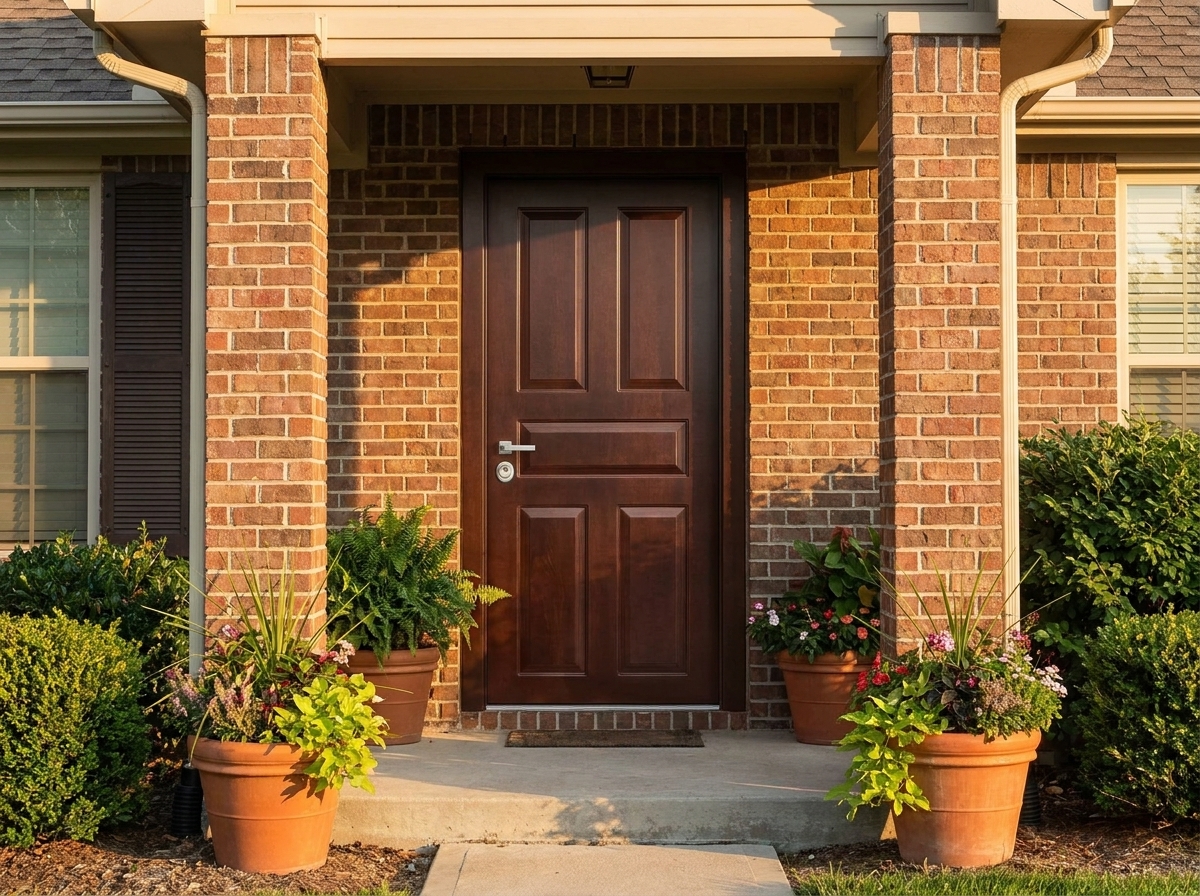
For people concerned about property security but who don’t want a large or heavy industrial door for aesthetic reasons, modern commercial security doors can use conventionally acceptable designs while still adding enhanced protection.
Some key design elements:
- Style Options: These residential security doors come in familiar styles with conventional handles that complement your home or office.
- Finish Options: You can finish your security door in the color and wood grain (veneer) that match your home or office.
- Hardware Options: We offer hardware to meet your functional needs, plus secure fasteners for your new door.
- Protection Level Options: Choose from various protection level options to help combat your specific threats.
Shield Security Doors manufactures its doors in North Carolina, USA. Unlike standard sizes, each door is built to specification. As a result, homeowners and business owners can customize every aspect (finish, size, security) of their door to match their building designs and security needs.
For more info on security trends and industry developments, visit the Shield Security Doors Media Page and find out more news coverage and our expert opinions.
How High Security Is Entering Residential Properties
Residential Security means much more than a simple deadbolt lock. Today, homeowners have many options to improve an entry door’s resistance to forced entry, strengthen the door, and create secure areas in their home. The three most notable are: multi-point locking systems, reinforced door cores, and safe rooms
From Single Deadbolts to Multi-Point Locking Systems
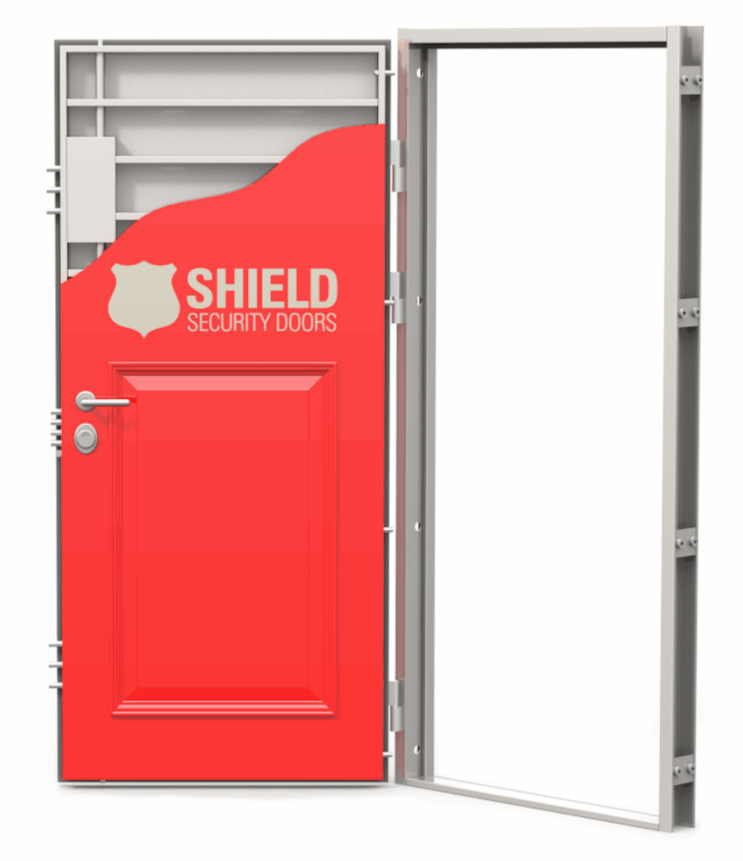
A single deadbolt locks a door in one spot, while a multi-point locking system engages bolts at various locations throughout the door frame. This spreads the locking force across more of the frame, making it harder to pry the door open.
When deciding between a multi-point lock and a deadbolt, consider:
- Traditional Deadbolt: Locks the door at one specific location.
- Multi-Point Locking System: Locks the door at multiple points on the door frame (usually top, center, and bottom).
- Overall Construction: The frame, hinges, and installation also affect how well the door resists forced entry.
Reinforced Cores for Greater Protection
A security door’s ability to protect against an intruder or bullet depends on how well it’s built and what the designer intended it to defend against. Shield Security Doors provides multiple levels of protection against both forced-entry and ballistic attacks, depending on your specific security requirements.
For example, the Shield Fortress Series has passed testing to the US Department of State’s SD-STD-01.01 Rev. G Forced Entry Standard as a FE15 rated product. In addition, UL 752 offers optional ballistic ratings through Levels 3-8.
These ratings indicate different types of threats the door may need to address: FE15 indicates whether the door will prevent forced entry under the test conditions in the specification, while UL 752 addresses the door’s resistance to various ballistic threats.
So, when choosing a security door, note that the level of protection needed depends on the risk factors associated with your property, its location, and the potential type of attack(s) you expect could affect it.
Safe Rooms as an Additional Layer of Home Security
Safe rooms for homes provide a secure area where household members can shelter during an emergency situation. A safe room’s design may include:
- Reinforced doors
- Stronger walls
- Locks that are harder to open
Homeowners also use these spaces to store valuables, important documents, and other items they want to protect. However, a safe room must be designed carefully.
To help household members reach their safe rooms quickly, the space should be easy to access. It should also be free of obstacles or interference that could block the pathway to the safe room. Finally, a safe room’s design should match the risks the household may face.
Together, these three features provide multiple layers of protection, from securing the main entrance to providing a safe location inside the home.

Why Workplace Protection Has Become a Priority in Commercial Spaces
Workplace security is more than protecting your business’s property and keeping people from breaking in. You also need to protect workers, visitors, and even company executives from potential threats, and limit access to secure or confidential areas. Custom high security front doors help with this by strengthening an entry point while limiting who can access that area.
Protecting Executives, Employees and Visitors
Commercial buildings face their own set of security threats, depending on their location and who uses them. Office environments housing high-profile individuals (executives), business assets, or confidential information require an additional level of scrutiny when controlling access. At the same time, employees want a safe work environment while on site.
High Security Doors are designed to limit unauthorized entry into areas requiring higher levels of controlled access. When paired with Visitor Management Systems and clear security protocols, High Security Doors can be part of a broader strategy to provide a secure work environment for all personnel in a commercial office.
Why Mechanical Locks Still Matter in Modern Workplaces
High-security mechanical locks physically secure doors without needing electricity. Because they have no electrical components, these locks will keep working even when electronic systems go down.
Mechanical locks can be used alone or alongside electronic access systems like card readers and biometrics. They offer another layer of physical protection, depending on the lock type, the quality of the door frame and other hardware, and whether the lock was installed properly.
Final Thoughts on High Security Trends for Homes and Businesses
High-security doors are a practical way for many homeowners and business owners to protect their properties from potential threats while maintaining functionality and visual appeal. The advanced security door features used (e.g., multi-point locking mechanisms, reinforced core materials, safe room designs, workplace access control devices) will depend on each property’s risk profile.
Have questions about the right security door for your property? Contact Shield Security Doors to discuss your needs and explore your options.