Ballistic Protection vs. Forced-Entry Protection: What’s the Difference and Do You Need Both?
Article Summary:
- Ballistic protection and forced-entry resistance protect against very different types of threats and therefore cannot be treated as interchangeable terms.
- A bullet-resistant door may not stop an intruder attempting to break in, but it will stop a bullet. A forced-entry-resistant door will not stop a bullet, but it will stop break-ins.
- The best security solution for you is the one that was independently tested under real-world conditions similar to your threat profile.
Most people imagine “security doors” as those that stop bullets, but in reality, there are two types: ballistic protection (stops bullets) and forced entry protection (stops a break-in).
While you can choose between ballistic and forced entry, we recommend having a balance of both. Here’s why:
- A ballistic protection door that can stop a 50 caliber bullet isn’t super protective if someone can pry it open with a crowbar in 15 seconds.
- Burglary and forced entry are the most common security concerns, not someone shooting at you from outside.
Therefore, we at Shield Security Doors, recommend choosing a reinforced security door with more forced entry protection. This is because even though bullets go through the door, it still won’t let the attacker into the building.
But ultimately, your choice depends on your needs, which is why this article details the differences between a bullet resistant vs forced-entry door. Our goal is to make it easier for you to understand what each protection offers and choose the best option for your property.
View our high-security gallery
What Forced-Entry Resistance Actually Means
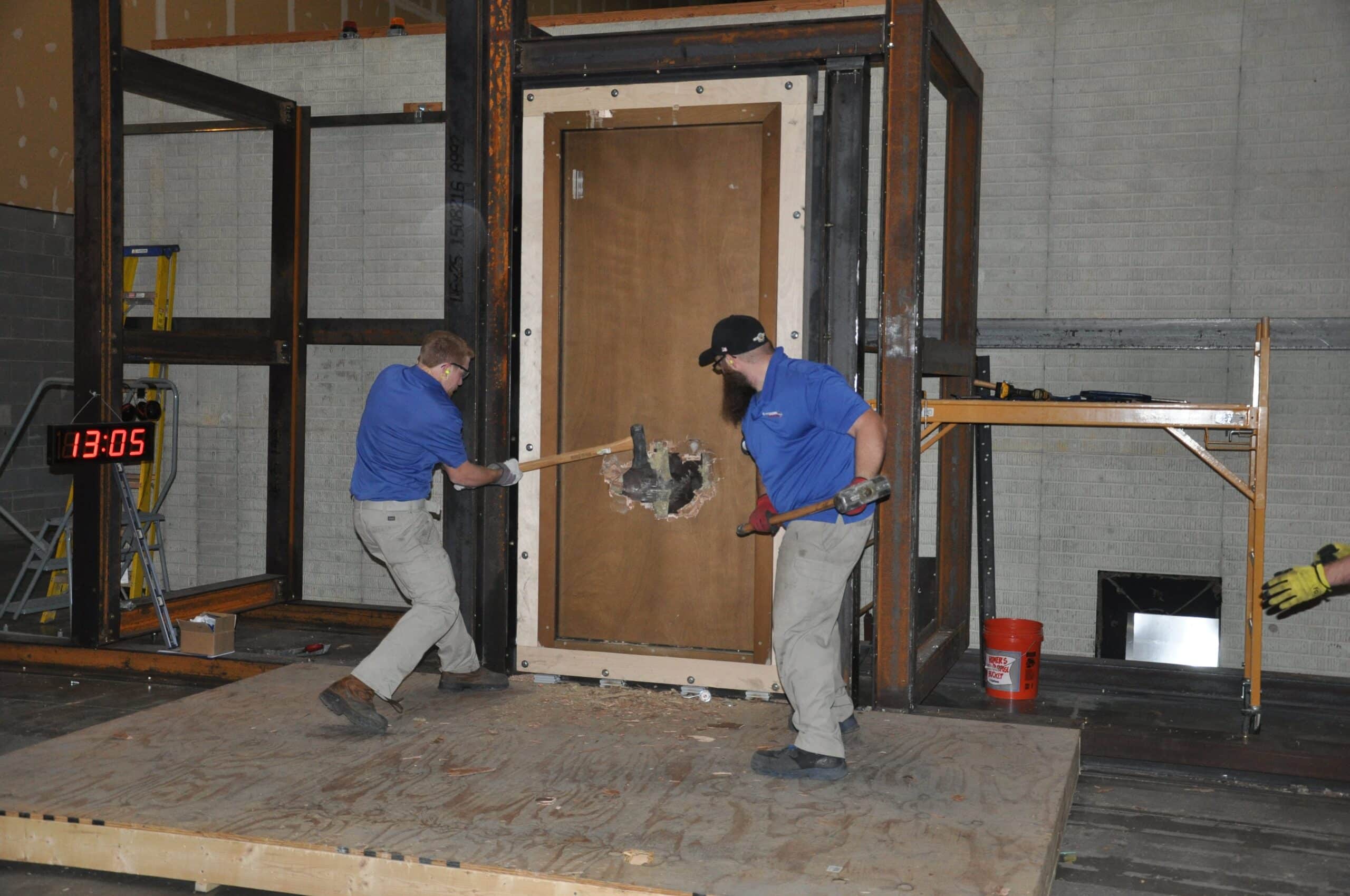
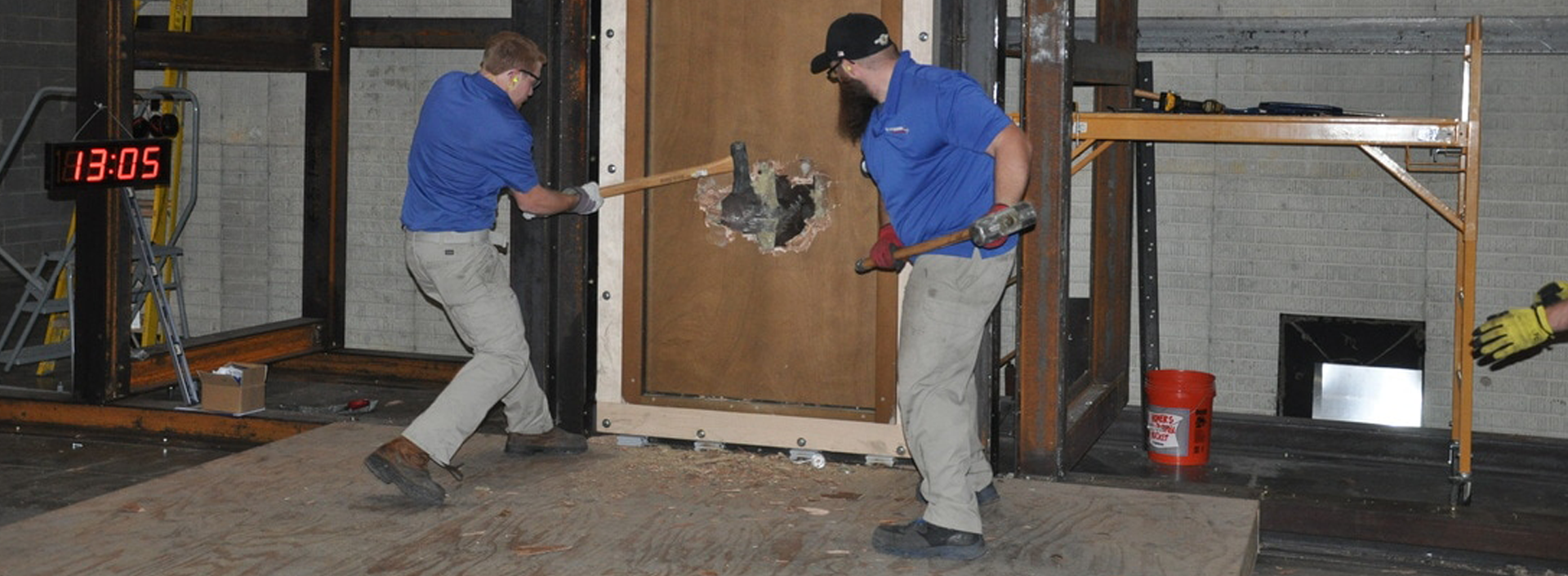
In simple words, forced-entry resistance is a door’s ability to withstand deliberate physical attacks in an attempt to gain unauthorized access into the property. These attacks can be carried out with a number of tools, such as crowbars, pry bars, sledgehammers, and even portable power tools.
To withstand these break-in attempts, most reinforced security doors are built with heavy-duty hinges, reinforced frames, high-security locking systems, and strengthened steel construction.
Keep in mind that the goal isn’t to make the door impenetrable, but to make forced entry extremely difficult, time-consuming, and very loud.How Forced-Entry Doors Are Tested and Rated
There are different ways to test a forced-entry security door, and different ratings indicate the standard used. One of the most recognized is the U.S. Department of State’s SD-STD-01.01, Revision H (REV-H) method, which has been established to test and evaluate security systems at Embassies and Government High-Risk Facilities.
This method involves having trained testers attempt to force open a fully assembled door using sledgehammers, pry bars, hand tools, and/or power tools within a specified time frame.
Note that REV-H does not measure a door’s strength but rather its ability to “delay” an aggressive individual attempting to enter, therefore REV-H serves as a good comparative evaluation method for High-Security Door Systems.
Why Forced-Entry Is Often the More Common Threat
In most cases, burglary, theft, vandalism, and unauthorized access are going to be greater concerns for your home or business than ballistic threats. This is further supported by FBI data that showed that more than half of reported burglaries involved forced entry. But regardless, it’s your duty to assess the threat level in your area and choose the security door that best suits the situation.
What Does Ballistic Protection Mean?
Ballistic protection is a door’s ability to block and stop penetration by projectiles from specific firearms, such as handgun and rifle rounds. However, not all ballistic-rated doors are created equal, which is why you need to understand ballistic ratings before making your choice.
Why Ballistic Ratings Matter
Ballistic ratings standards provide an accurate method of measuring how a door performs against a threat. Manufacturers no longer need to make claims such as “it is bulletproof,” but rather they can specify what type of ammunition a door was able to withstand.
The ratings would mention factors like:
- Caliber & projectile
- Bullet Velocity
- Number of Impacts
- Shot Placement
- Whether Penetration occurred
With these ballistic security door ratings explained, you can better find the perfect match for your property and the expected threat level.
Why Independent Testing Matters
Manufacturers are often reliable, but independent lab testing is a much stronger indicator of a ballistic-resistant door’s strength. These independent lab tests are conducted by an unbiased third party that verifies that the door meets established standards and performs within those parameters.
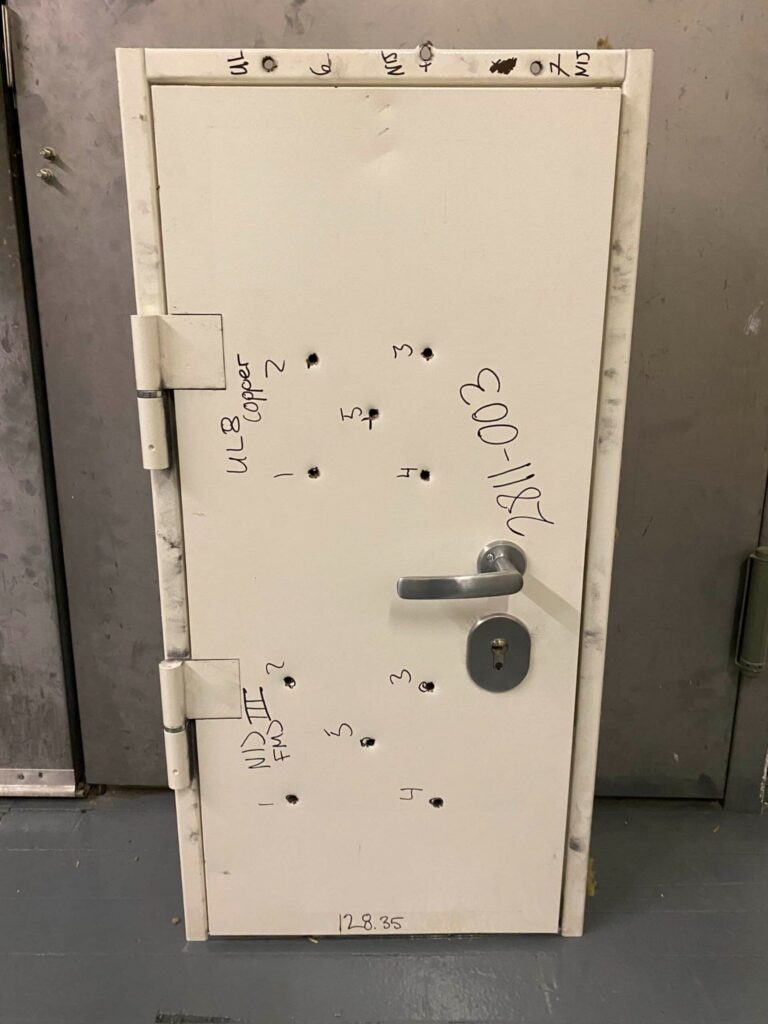
When reading these test reports, look for information about the testing standard used to evaluate the door, what type of ammunition was tested on the door, how many rounds of ammunition were fired into the door, and whether the frame and hardware were tested as well.
See our Shield Security Doors in action to get a better idea of how these high-security ballistic doors perform when tested rigorously.
| *NOTE: Before buying a security door from any company, make sure to ask for proof. The company should be able to provide critical details on how their doors were tested and where. |
Understanding UL 752 Ballistic Ratings
One of the best-known ballistic standards is UL 752. There are a variety of rating levels under this standard; however, for this article, we will focus on three of them:
- UL 752 Level 3: A good option for common handgun threats such as the .44 Magnum.
- UL 752 Level 7: Generally recommended when you want to protect against specific 5.56mm rifle threats.
- UL 752 Level 8: Recommended if you want to protect against specific 7.62mm rifle threats.
The ballistic rating you choose will depend on the level of security required. Most residential buildings are well protected with lower ballistic ratings. On the other hand, commercial buildings, government facilities (such as embassy security doors,) and other high-risk environments are better served by higher levels of ballistic protection.
Why a Bullet-Resistant Door May Not Stop a Break-In
One of the most common misunderstandings about physical security is assuming that all ballistic-protected doors also provide some level of forced-entry resistance.
Although a bullet-resistant door may stop handgun or rifle rounds, this does not necessarily mean that the same door will resist pry attacks, lock attacks, etc. Similarly, many forced-entry-resistant doors are designed to prevent break-in attempts, but they rarely undergo ballistic testing.
This means that potential buyers are often overlooking large security gaps in their new doors. To provide the greatest level of security possible, it is recommended that you select a door that has been tested and rated for the specific threats your property may encounter (ballistic or forced entry).
A Security Door Is Only as Strong as Its Weakest Component
Many people tend to look at a door’s rating and assume it applies to all its systems. However, many components, especially the ballistic door core, contribute to a secure door. If there is a weakness in any part of these systems, it can threaten the other parts.
Common weak areas include:
- Non-rated frames combined with rated doors.
- Hardware (locks, hinges, etc.) and strike plates that are unable to withstand the force of an attack.
- Lack of ballistic/forced-entry protection on glass inserts used in the security door.
- Improperly installed, resulting in gaps that can be exploited by an intruder.
Remember, ballistic and forced-entry ratings are two different ratings. A product may protect against bullets but not forced entry, while reinforced glazing may protect against impacts but not ballistic threats.
Every product has limits to its performance. To achieve effective security, you must ensure your door, frame, hardware, and glass work as one, completely rated unit.
How to Choose the Right Ballistic Rating for Your Project
The highest ballistic rating does not necessarily mean you have the best possible protection. Choosing the right security door for your commercial property means considering three main factors: understanding your risk profile, identifying the most likely threats, and verifying that the door is tested for those threats.
Assess Your Real Threat Environment
First, evaluate your real-world threats. What type(s) of threats does your location typically experience? Is it a home/residential building, a retail/commercial facility, a government building, or an infrastructure site? All locations have their own unique security needs, which will also determine their need for ballistic protection.
Match the Protection to the Threat
You want to choose a ballistic rating that matches the type of threat you see in your area. This way, you will get enough ballistic protection without paying extra money for a system that has more than you need.
Review the Test Report Carefully
Always check for testing documentation from an independent third-party test lab. The test document should include information about the test lab that performed the tests, the calibers and ammunition used, the firing distance, where shots were fired into the door (shot placement), the number of rounds fired at the door, and whether there was penetration or failure during testing.
We Can Help You Find the Right Security Door
Ballistic protection and forced-entry resistance are two different security issues, so it’s important to identify your focus when selecting a security door.
There’s also the option of finding a door that can handle both issues to a reasonable degree. However, you’ll need to properly screen the hardware and ensure the frame, glass, security systems, and other factors work consistently.
For professional help and suggestions, contact Shield Security Doors. We’re happy to help determine the right balance of ballistic protection and forced-entry resistance for your property.