European vs. American Forced Entry Standards for Doors and Windows
Article Summary
- The State Department SD-STD-01.01 and European EN1627 forced entry standards are the most commonly specified standards for high security doors and windows.
- Both standards are designed to evaluate how long a door or window will resist attack.
- The standards are designed with different target audiences.
- The State Department standard is primarily intended for extremely high-risk government buildings and facilities.
- The EN1627 standard is primarily intended for lower-threat residential and commercial applications.
The two most commonly cited forced entry standards for security doors and windows are the US State Department (DoS) SD.STD-01.01 and the European EN1627. Each standard has various levels of forced entry resistance that can be tested to. On the US side: FE5, FE15, and FE60. On the European side, RC1, RC2, RC3, RC4, RC5, and RC6.
The main difference between the various levels is time. How long will a door or window resist against an attack with a given set of tools and number of attackers? Over the last decade, we’ve tested our Shield Embassy Series and Fortress Series doors and windows to these standards countless times at independent laboratories in Europe and the US. Along the way, we’ve learned a lot about the differences and common mistakes people make when evaluating them.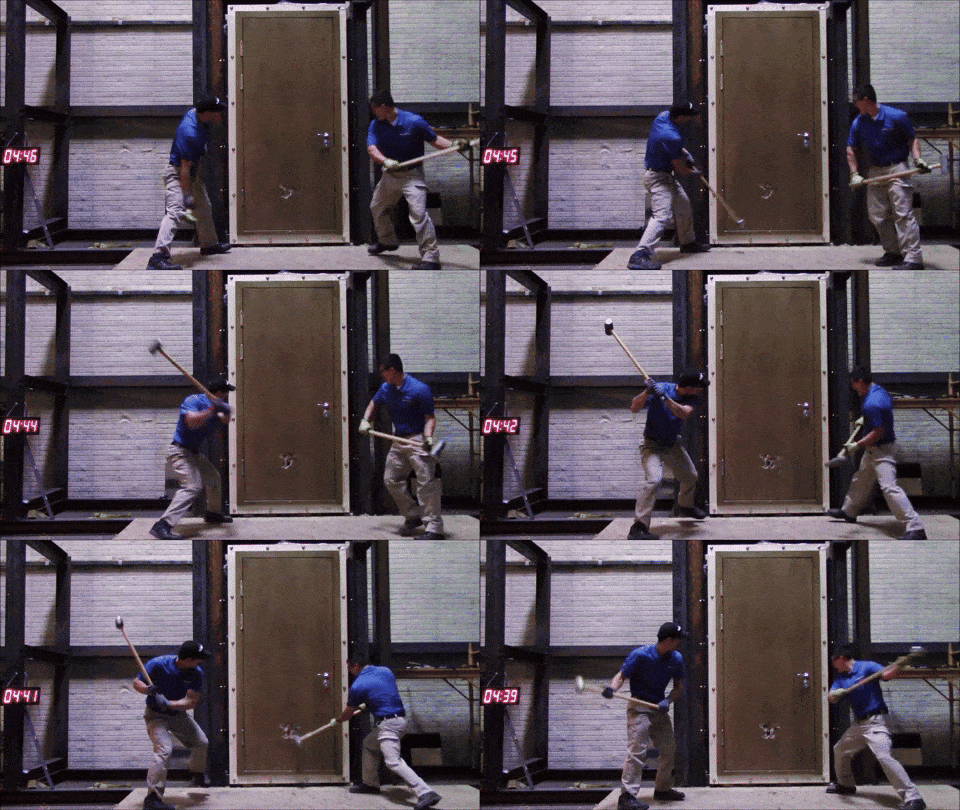
Overview
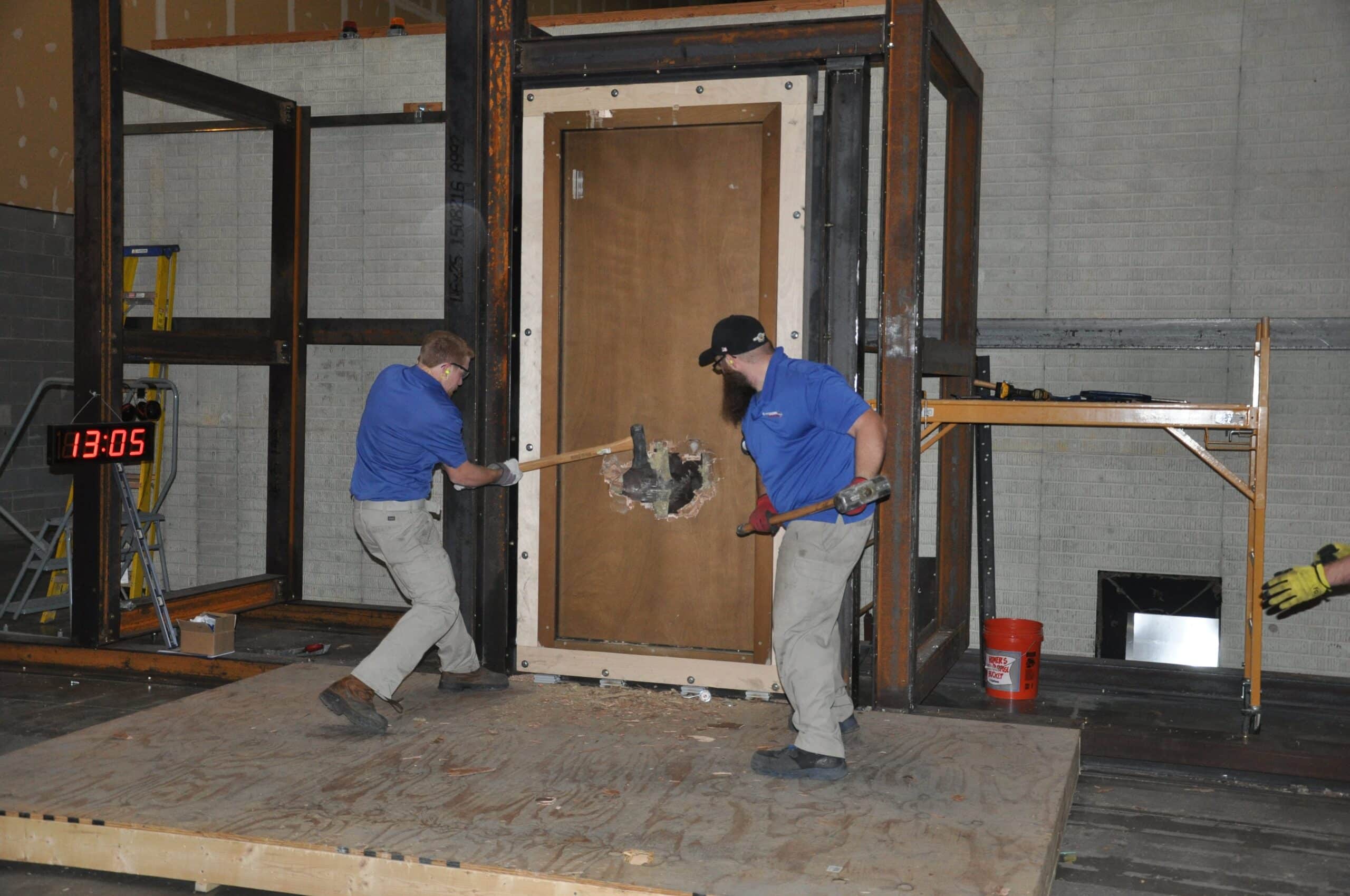
The State Department standard is designed and primarily intended for government use, as it sets the requirements for doors and windows used at US embassies and consulates around the world. Testing consists of a team of 6 attackers using mechanical tools such as sledgehammers, axes, battering rams, and wedges. The reason the State Department standard is widely used outside of government applications is because it is the gold standard for testing. There is no other forced entry standard in the world that is more rigorous and difficult to pass than the State Department standard. The European EN1627 standard is primarily designed for residential security because security doors are very common in European homes and apartments. Although the higher levels (RC4, RC5, and RC6) are suitable for high security applications and allow for the use of mechanical tools and some power tools.The Details
The US State Department standard is significantly more rigorous and difficult to pass, largely due to the number of attackers—six in total. This is meant to simulate a mob attacking a US Embassy in a foreign country. For each level: FE5 (5 minutes), FE15 (15 minutes), and FE60 (60 minutes), the team of attackers focuses on three points: the lock side, the hinge side, and the center of the door. A door must withstand each of the three attack points in order to be certified, and the team cannot pause the clock to evaluate or rest during the test. The total attack time for each level is:- FE5: 1.5 man hours of attack time (5 minutes on each of the 3 attack points, 6 man team)
- FE15: 4.5 man hours of attack time (15 minutes on each of the 3 attack points, 6 man team)
- FE60: 18 man hours of attack time (60 minutes on each of the 3 attack points, 6 man team)
- RC3: 5 minutes of attack time/machine time (20 minutes max including pauses and rest)
- RC4: 10 minutes of attack time/machine time (30 minutes max including pauses and rest)
- RC5: 15 minutes of attack time/machine time (40 minutes max including pauses and rest)